Klyvora
Enterprise-grade network switching fabrics and mission-critical server hardware specifically adapted for high-density datacenters, smart manufacturing plants, and high-performance computing centers in the Pécs metropolitan region.
Pécs, positioned strategically as the economic, educational, and industrial nexus of South Transdanubia in Hungary, is experiencing a fundamental structural transformation. Historically known for light manufacturing and heritage industries, the city has rapidly evolved into a high-technology industrial center. Driven by the expansion of the Pécs Southern Industrial Park, proximity to major European transportation corridors (M6 motorway network), and close integration with the University of Pécs’s advanced engineering and computer science faculties, the region is attracting large-scale foreign direct investments (FDI) in automotive component fabrication, electronics assembly, renewable energy systems, and modern cold-chain logistics.
This industrial acceleration requires a resilient, hyper-scalable, and secure digital substrate. Modern automated manufacturing facilities operating within Industry 4.0 frameworks no longer treat network switches as peripheral accessories; they are mission-critical operational technology (OT) assets. Industrial robots, automated guided vehicles (AGVs), real-time computer vision inspection systems, and enterprise resource planning (ERP) databases demand deterministic latency, zero packet loss, and multi-gigabit throughput.
Factories operating in Pécs require sophisticated layer 2 and layer 3 networking switches configured in resilient Spine-Leaf topologies to prevent internal bottlenecks. As local facilities deploy industrial Internet of Things (IIoT) sensors by the tens of thousands, network switch hardware serving Pécs must offer multi-gigabit PoE++ (IEEE 802.3bt) capability, dynamic VLAN segmentation, and hardware-level MACsec encryption to guard against industrial espionage and cyber-physical disruption.
The global enterprise networking hardware market is undergoing a seismic paradigm shift. Legacy hierarchical three-tier architectures (Core, Distribution, Access) are rapidly being decommissioned in favor of high-performance, non-blocking Spine-Leaf architectures powered by EVPN-VXLAN (Ethernet VPN - Virtual Extensible LAN) protocols. This transformation is driven by several critical technological trends:
Implementation of IEEE 802.1Qbv standards ensuring bounded latency and deterministic communication across shared industrial Ethernet fabrics, replacing legacy proprietary fieldbus systems in automated assembly lines.
Delivery of up to 90W per port via IEEE 802.3bt, enabling direct power delivery to smart pan-tilt-zoom security cameras, wireless Wi-Fi 6E/7 Access Points, and industrial touch controllers without local AC power drop installations.
Transition toward programmable switching silicon (Broadcom Trident/Tomahawk families, Barefoot Tofino) combined with disaggregated network operating systems (SONiC, Cumulus Linux) reducing total cost of ownership (TCO).
For enterprise procurement officers sourcing network switch systems for facilities servicing Pécs, navigating this technological evolution requires a balance between forward-looking architecture and pragmatic budget efficiency. Factory planners must select switching fabrics capable of scaling seamlessly from 10G/25G access speeds to 100G/400G core links while retaining backwards compatibility with legacy RS-485 and Modbus gateways integrated across operational assembly equipment.
In the global market for enterprise network hardware, Chinese OEM and ODM manufacturing clusters—centered around Shenzhen, Dongguan, and Suzhou—represent the pinnacle of electronics manufacturing efficiency, hardware innovation, and component supply chain density. Contracting with premier Chinese network switch factories provides European industrial buyers in Pécs with incomparable strategic advantages:
The spatial concentration of component suppliers in Southern China allows network switch factories to source multi-layer PCB boards, power modules, high-frequency pulse transformers, and optical transceiver sockets with zero latency. This component proximity reduces production lead times from months to days, shielding global buyers from extended macro-supply chain disruptions.
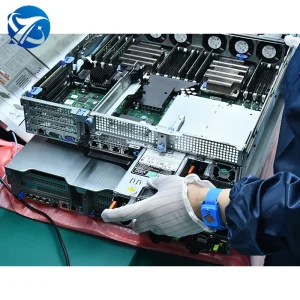
Leading manufacturers utilize automated optical inspection (AOI), X-ray solder joint verification, and full-load thermal burn-in stress testing chambers (operating continuously at 50°C elevated temperatures for 72+ hours). This guarantees that network switch units arriving at Pécs industrial zones achieve zero-day reliability ratings.
Unlike rigid off-the-shelf vendor solutions, specialized factories offer deep board-support package (BSP) and firmware customizations. Systems can be pre-configured with custom ONIE (Open Network Install Environment) bootloaders, tailored VLAN maps, customized CLI commands, and optimized thermal fan curves prior to dispatch.
Leveraging direct air freight to Budapest Ferenc Liszt International Airport or optimized rail freight routes across Eurasia directly connecting into Central Europe, Chinese OEM switch supplies can be delivered directly to job sites in Pécs within tight project deployment windows, bypassing traditional middleman markups.
Networking infrastructure demands differ substantially based on operational topology. Below are real-world architectural deployment patterns implemented for enterprises in the Pécs economic zone:
| Deployment Sector (Pécs Region) | Primary Network Hardware Requirement | Recommended Topology & Features | Key Operational Benefit |
|---|---|---|---|
| Automotive Electronics Assembly (Southern Park) | Managed Industrial L2+/L3 Switches with PoE++ & Metal Chassis | Ring topology (ERPS G.8032) with <20ms self-healing recovery times. | Prevents assembly line shutdowns during unexpected fiber cuts or node failures. |
| University Research & AI Compute Hubs | 100G/400G Spine-Leaf Optical All-Flash Switch Fabric | EVPN-VXLAN over BGP with RDMA over Converged Ethernet (RoCEv2). | Ultra-low latency inter-server communication for deep learning training workloads. |
| Regional Logistics & Distribution Centers | High-Density 10G SFP+ Core Switches with Dual Redundant PSUs | Stackable dual-homing core with link aggregation (LACP) across access nodes. | Continuous real-time tracking, barcode scanning, and Automated Guided Vehicle (AGV) connectivity. |
| Smart Utility & Municipal Infrastructure | Hardened Industrial Din-Rail Switches (-40°C to +75°C) | Time-Synchronized (IEEE 1588v2 PTP) node networks with surge protection. | Stable outdoor telemetry operation under extreme weather conditions. |
Evaluating enterprise equipment requires precise technical evaluation of bandwidth density, packet processing capabilities, power draw, and physical footprint. The matrix below outlines specifications for tier-1 network switch and compute server platforms supplied to regional systems integrators servicing Pécs:
| Hardware Model | Form Factor | Port Configuration & Throughput | Switching Capacity / Packet Forwarding | Power Redundancy & Cooling |
|---|---|---|---|---|
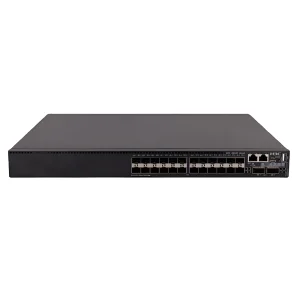
| H3C S6520X-30QC-EI Switch | 1U Rackmount | 24x 10G SFP+ Ports + 2x 40GE QSFP+ Expansion Slots | 1.28 Tbps / 960 Mpps forwarding rate | Dual hot-swappable AC/DC power modules; front-to-back airflow fans |
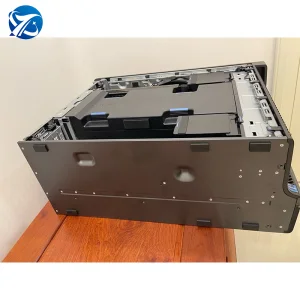
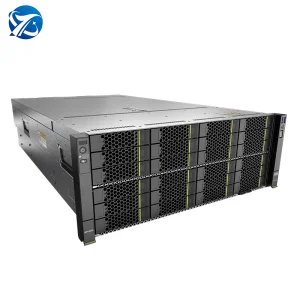
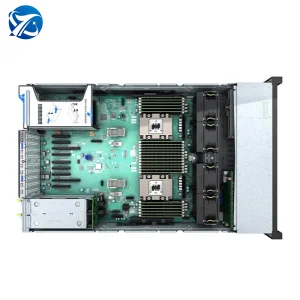
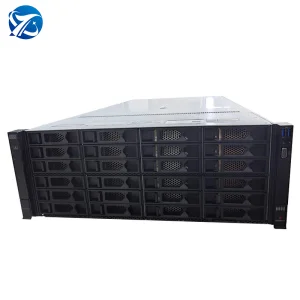
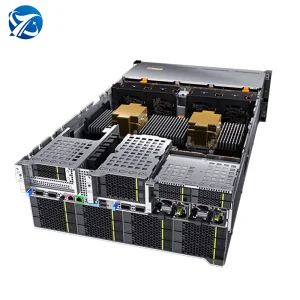
| xFusion FusionServer 5288 V6 | 4U Enterprise Server | 36x 3.5" Drive Bays; Dual Intel Xeon Scalable Processors | PCIe 4.0 expansion lanes supporting dual 100G NIC cards | 2000W 80 Plus Platinum hot-swap redundant PSUs |
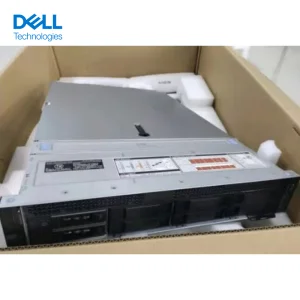
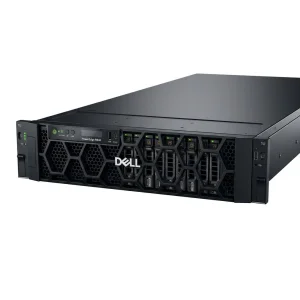
| Dell PowerEdge R960 Node | 4U Dense Compute | 4-Socket Intel Xeon Architecture; up to 64 DDR5 DIMM slots | Multi-terabit internal bus throughput for large DB operations | 4x Redundant 2400W Titanium PSUs; intelligent thermal fan arrays |
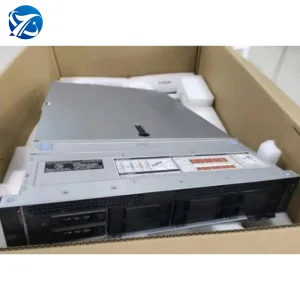
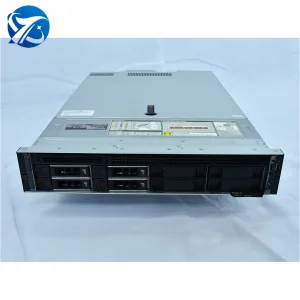
| PowerEdge R450 Edge Server | 1U Slim Chassis | Up to 8x 2.5" SAS/SATA SSDs; Dual Xeon Scalable Processors | Integrated Dual 10GbE SFP+ LOM + PCIe 4.0 expansion slot | Hot-plug redundant 800W PSUs; high-velocity silent fan modules |
Klyvora Node Technologies Ltd. is a premier high-performance computing infrastructure manufacturer specializing in AI GPU server systems, scalable compute clusters, high-density enterprise network switching gear, and custom datacenter solution architecture. Established in 2016, the enterprise operates a modern state-of-the-art production facility with a dedicated manufacturing footprint, supporting integrated R&D, surface-mount assembly, automated testing, thermal stress simulation, and rigorous quality control operations.
The company reports annual export revenue ranging between USD 8 million and USD 22 million, backed by over 6 years of international export expertise and 11 years of deep industry background in high-speed hardware manufacturing. Klyvora maintains an expansive global service footprint, supplying key technology integrators and enterprise facilities across North America, Europe (including dedicated supply channels serving Central Eastern European nodes like Pécs), the Middle East, and Southeast Asia.
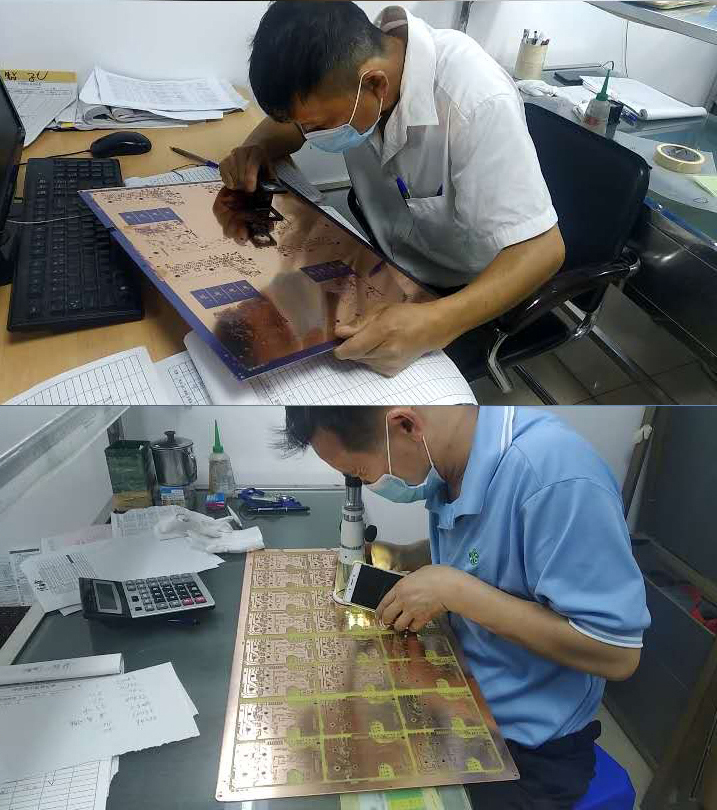
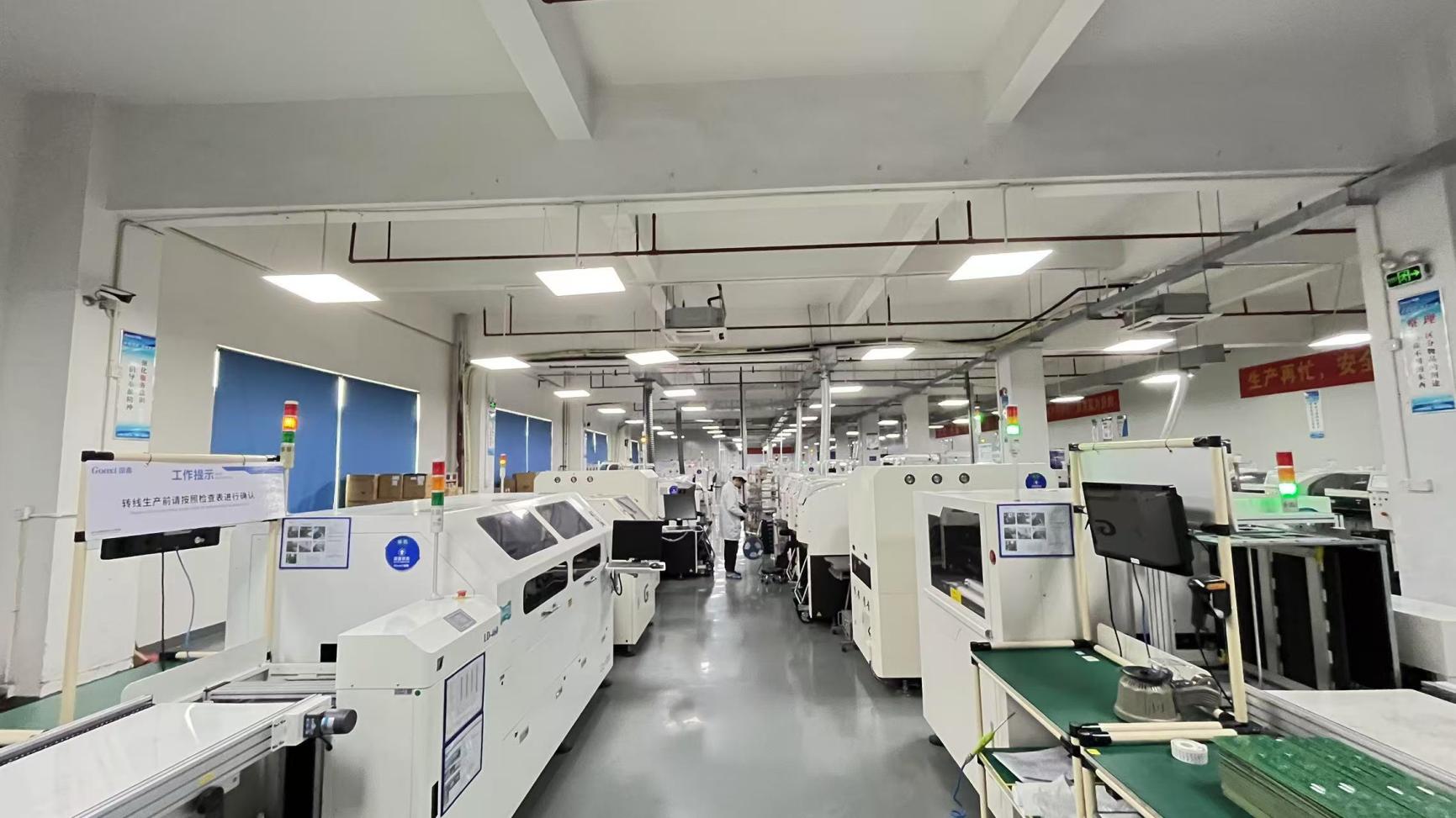
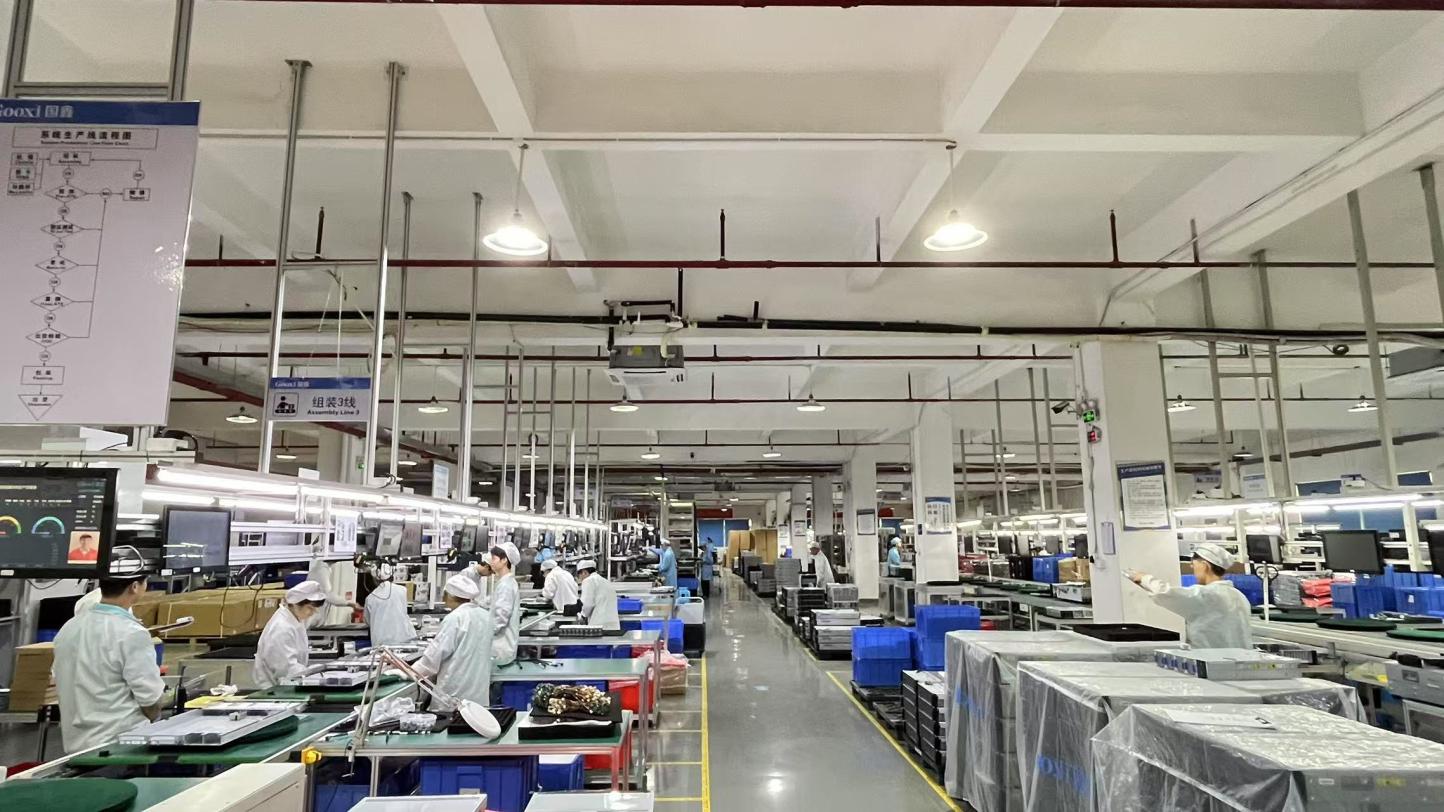
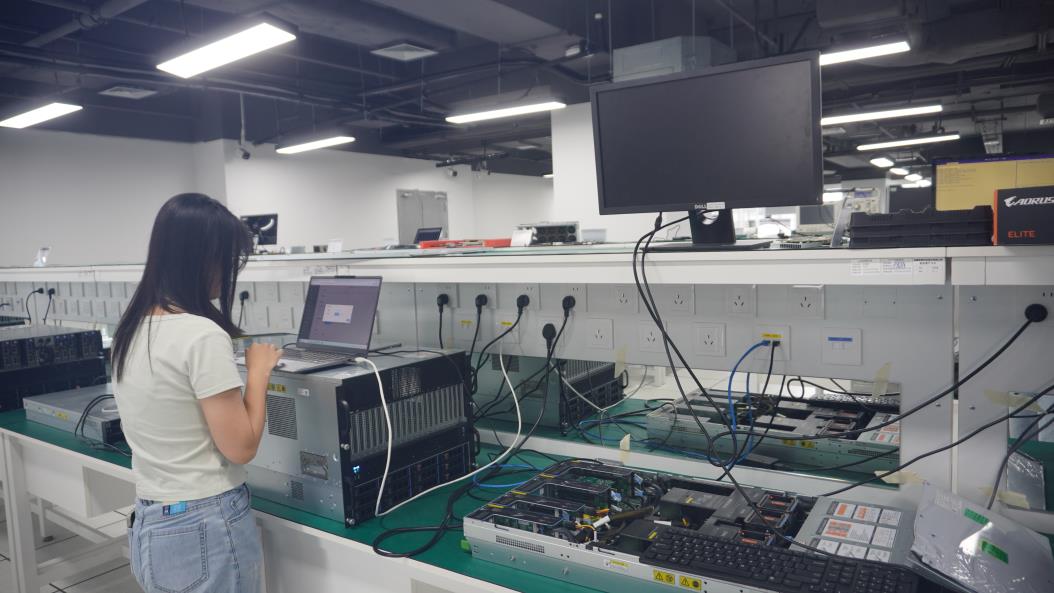
Klyvora Node Technologies enforces a multi-tier quality management framework. Every unit undergoes fully automated optical board diagnostics, multi-stage functional protocol verification, and full-system thermal burn-in stress testing prior to global export. The dedicated quality control department consists of approximately 42 skilled specialists ensuring continuous adherence to international CE, FCC, RoHS, and ISO9001 standards.
Collaborating with a global strategic supply network of over 860 qualified component suppliers, Klyvora maintains guaranteed component access for premium network switching ASICs, high-speed optical transceivers, server-grade motherboards, and titanium-grade power systems. The engineering organization boasts a team of roughly 180 engineers dedicated to custom switch firmware optimization, liquid-cooling hardware integration, and high-density GPU chassis development. Reflecting this rapid innovation velocity, Klyvora has brought approximately 86 new enterprise hardware products to market over the past calendar year alone.
All enterprise switching hardware and server platforms exported to Hungary and the broader EU market undergo rigorous third-party testing by accredited laboratories (such as SGS or TÜV Rheinland). Full EU Declarations of Conformity (DoC) covering Electromagnetic Compatibility (EMC Directive 2014/30/EU), Low Voltage Directive (LVD 2014/35/EU), and Restriction of Hazardous Substances (RoHS 2011/65/EU) are issued and supplied with customs clearance paperwork.
Standard OEM/ODM orders requiring customized chassis branding, pre-configured port layouts, and flashed enterprise firmware typically require a 2 to 3-week production cycle. Air freight shipping directly into Budapest (followed by direct truck transfer to Pécs) takes approximately 5–7 business days. For bulk deployments, optimized multimodal logistics (sea-rail or air-express) can be scheduled according to project milestones.
Spine-Leaf topology ensures deterministic, equal-cost multi-path (ECMP) routing with uniform hop distances (exactly two hops between any two leaf nodes). In automated manufacturing environments where robots, machine-vision systems, and edge servers constantly exchange high-volume east-west traffic, Spine-Leaf eliminates latency spikes and core bottlenecking inherent in legacy tree topologies.
Yes. Modern enterprise switching hardware adheres strictly to IEEE networking standards (e.g., 802.1Q VLANs, 802.3ad LACP, 802.1w RSTP/802.1s MSTP, BGP, OSPF). Furthermore, optical SFP+/QSFP28 transceiver slots feature open-vendor EEPROM compatibility, allowing seamless interconnection with installed legacy switches, firewalls, and storage networks.
Industrial-grade switches designed for harsh environment deployments feature fanless aluminum heat-dissipation enclosures rated IP30 or IP40, conformal coating on PCB electronics to guard against moisture and chemical dust, extended operating temperature ratings (-40°C to +75°C), and 6kV surge protection on all RJ45 copper ports.
802.3bt PoE++ supplies up to 90W of DC power per ethernet cable run. This eliminates the necessity of hiring certified high-voltage electricians to run local 230V AC lines to ceiling-mounted Wi-Fi 7 access points, IP camera arrays, access control barriers, and thin-client terminals, cutting infrastructure deployment costs by as much as 35-40%.
Klyvora provides standard 3 to 5-year hardware replacement warranties. For strategic regional deployments in Pécs and Central Europe, advanced hardware replacement (AHR) options and direct Level-3 remote engineering support (covering VLAN design, EVPN-VXLAN troubleshooting, and firmware upgrades) are accessible 24/7.
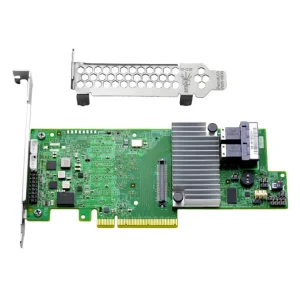
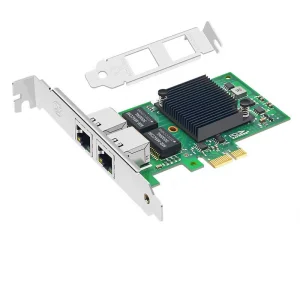
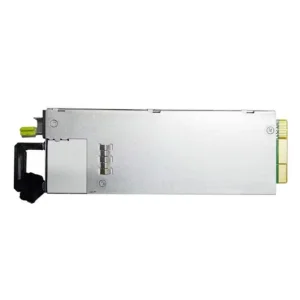
Explore our full line of enterprise network switches, GPU compute nodes, expansion cards, and power infrastructure configured for rapid deployment across South Transdanubian industrial hubs.
Whether you are planning a greenfield smart factory installation in the Pécs Southern Industrial Park or upgrading an existing data center network fabric, our engineering team provides end-to-end BOM generation, switch customisation, and competitive direct OEM pricing.
Send Inquiry Now