 Klyvora
Klyvora
Klyvora
Deploying redundant, secure, and mission-critical server hardware to anchor high-availability distributed business workflows globally.
An analytical analysis of Klyvora Node Technologies Ltd.’s alignment with enterprise computing shifts.
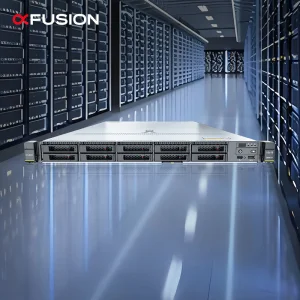
Modern remote work optimization has progressed past standard application-layer delivery into highly integrated, bare-metal high-density server configurations. Global organizations demand bulletproof computing arrays capable of hosting Virtual Desktop Infrastructures (VDI), localized Artificial Intelligence pipelines, secure rendering pools, and multi-tenant Storage Area Networks (SAN). Klyvora Node Technologies Ltd. operates as a leading authority in high-performance computing (HPC) infrastructure fabrication, engineered explicitly to meet these requirements.
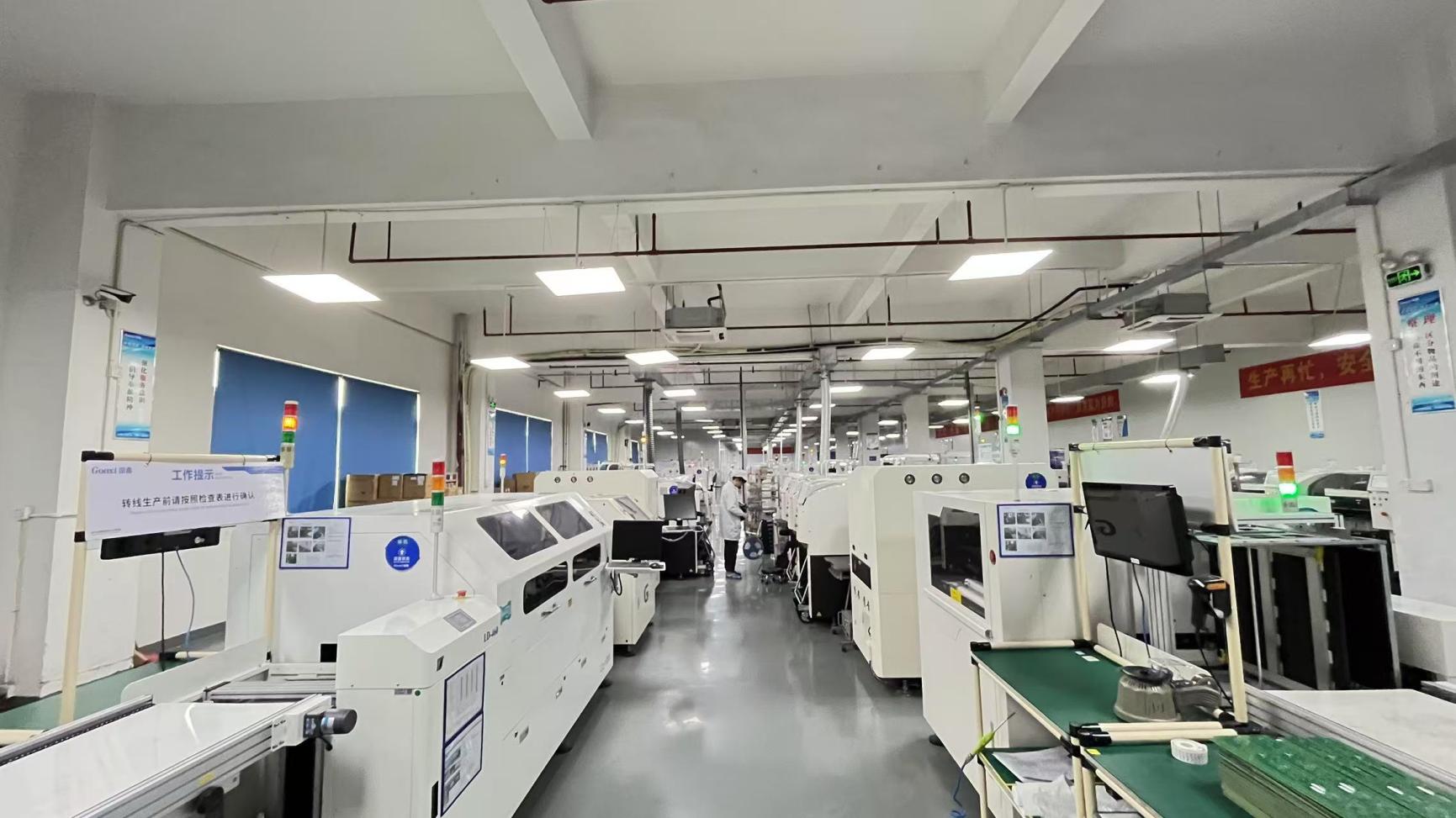
Founded in 2016, Klyvora Node Technologies Ltd. has constructed a dedicated, hyper-focused infrastructure ecosystem that seamlessly merges intensive engineering Research & Development with rigorous end-to-end component qualification. The company runs a highly optimized precision system integration center covering 320㎡, engineered explicitly for multi-phase stress testing and layout design. Klyvora addresses the growing demands of modern remote architectures by utilizing sophisticated structural diagnostics to assure minimal latency and zero-fault data synchronization thresholds across multiple continents.
Klyvora Node Technologies Ltd. manifests substantial operational continuity and financial capability to support large-scale government, academic, and enterprise procurement cycles.
Bridging bare-metal compute capacity with secure, globally scalable application topologies.
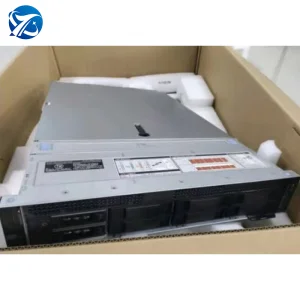
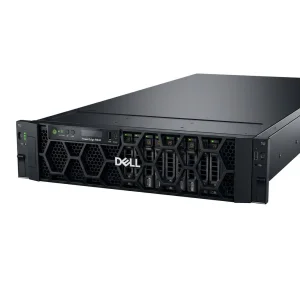
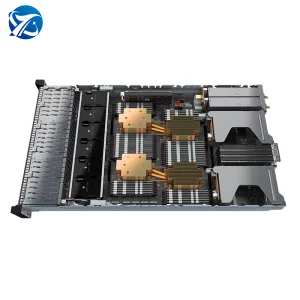
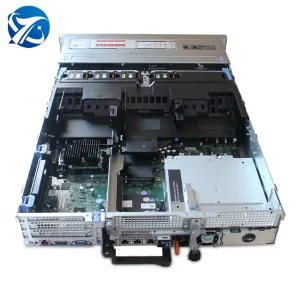
Delivering persistent virtual working spaces demands extreme input/output performance (IOPS) and specialized processing profiles. By deploying 1U/2U multi-socket computing nodes equipped with scalable processors and advanced storage management cards, enterprises can guarantee zero-latency desktop sessions for thousands of remote engineers, algorithmic traders, and security personnel.
With the integration of open-weights frameworks like DeepSeek, remote development workflows require centralized nodes optimized for large language model workloads. Enterprise infrastructure arrays maximize local hardware interconnectivity to provide distributed remote teams with instant access to code-generation models, data processing resources, and security sandboxes.
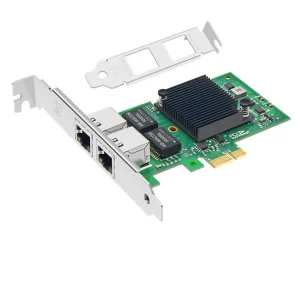
Data exposure at the edge remains a prominent risk vector for remote organizations. Utilizing centralized, high-capacity SAS hard drive arrays paired with PCIe 4.0 host bus adapters enables companies to execute continuous live mirroring, real-time volume snapshots, and hardware-level encryption, keeping confidential source data isolated within protected facilities.
Deconstructing the structural advantages enabling rapid customization and robust quality assurance.
The global infrastructure landscape requires agile manufacturing operations to adapt quickly to evolving chipset layouts, power requirements, and localized compliance revisions. Klyvora Node Technologies Ltd. leverages a supply network encompassing more than 860 authenticated tier-one component suppliers. This vast logistical footprint ensures unhindered procurement of tier-one base silicon, dense computing layouts, server motherboards, digital power control setups, and high-efficiency multi-phase thermal units even during global microcomponent shortages.
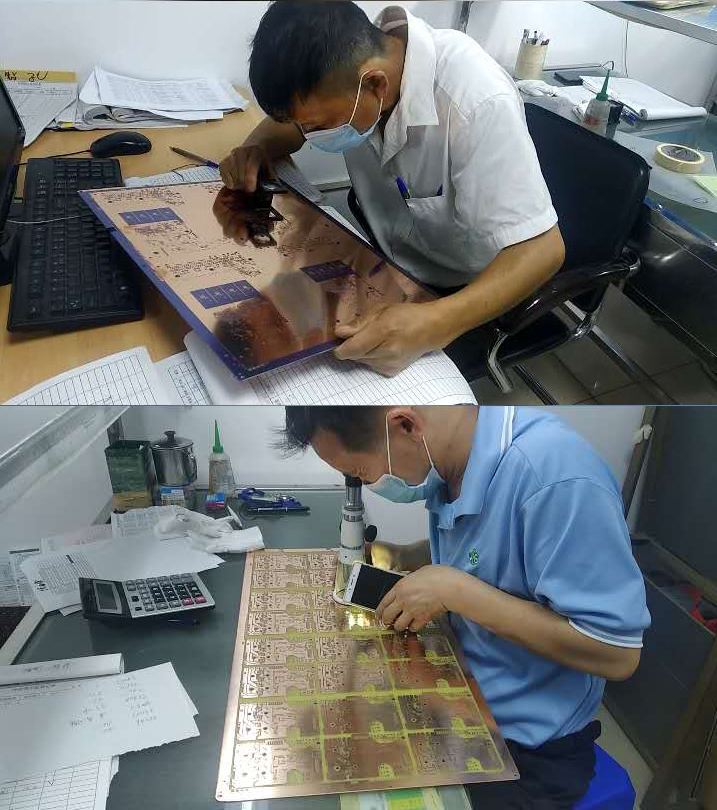
Operating a meticulous, multi-tiered structural quality verification framework, Klyvora’s 42 dedicated quality assurance professionals carry out automated component screening, high-temperature environmental burn-in analysis, and deep data-path functional testing on every server frame. This structural discipline guarantees that systems deployed in remote enterprise hubs operate continuously for years without component degradation, directly reducing the Total Cost of Ownership (TCO) for data center operators.
The shift toward high-speed interconnects, liquid-assisted thermal dissipation, and deep model processing optimization.
The standard corporate technical design is evolving rapidly away from legacy SATA topologies toward enterprise SAS 12Gb/s and NVMe over PCIe 4.0/5.0 interfaces. Klyvora's upcoming engineering cycles heavily integrate specialized RAID controller mechanisms operating on high-bandwidth PCIe configurations. These configurations allow remote storage structures to avoid write-performance bottlenecks, granting decentralized database specialists instant access to multiple distributed processing arrays simultaneously.
With remote engineering units increasingly requiring persistent access to machine learning execution layers, Klyvora's technical design emphasizes high-density rack computing infrastructure with multi-socket capabilities. These frames are custom-configured to accommodate large-scale model architectures, such as DeepSeek, allowing operations to execute localized text processing, automatic code checking, and secure predictive analysis without routing sensitive operational datasets across public networks.
As calculation density per rack cabinet surpasses historical thresholds, conventional air cooling mechanisms introduce acoustic and heat challenges. Klyvora’s R&D division—comprising roughly 180 system optimization engineers—is currently scaling advanced cooling variants, including closed-loop liquid cooling cold-plates and specialized internal heatsink spacing profiles. These advancements keep system thermals well within nominal ranges, avoiding processing throttling during high concurrent user stress loads.
Future system firmware developments aim to provide hardware-enforced processing slices for individual remote departments. By implementing hypervisor-level container security profiles and hardware-rooted trust modules within network adapters, a single Klyvora rack platform can reliably isolate development, financial accounting, and administrative assets on a shared physical server layout.
Deconstructing the essential requirements of enterprise technology buyers and supply managers.
Enterprise procurement teams rarely purchase static, unmodified hardware configurations. Klyvora addresses this need by providing comprehensive bare-metal configuration options, including customized mechanical rack frames, adjustable power supply units (from 600W to 2000W redundant arrays), and specialized BIOS/Firmware parameter tuning to maximize efficiency under proprietary software stacks.
A major concern for data center directors involves mid-cycle component obsolescence. Klyvora guarantees long-term product support cycles by selecting server-grade chipsets and high-reliability mechanical disks with extended mean time between failures (MTBF), ensuring that enterprises can scale out identical infrastructure layouts over multi-year deployment plans.
By leveraging its structured ecosystem of over 860 trading partners, Klyvora offers highly reliable lead times and logistical visibility. This structured execution minimizes project delays, giving global deployment managers confidence that critical computational upgrades will arrive on schedule.
Aligning hardware physical topologies with evolving transnational legal frameworks.
Deploying centralized computational units to manage remote workforces requires strict adherence to international regulatory matrices. Data residency laws, such as the European Union’s General Data Protection Regulation (GDPR), the United States’ HIPAA framework, and localized data localization directives, mandate that user files remain within specified geographic borders. Klyvora Node Technologies Ltd. assists global compliance officers by delivering flexible hardware configurations that permit absolute compartmentalization of localized storage nodes.
Every server frame exported to markets in North America, Europe, the Middle East, and Southeast Asia complies fully with international electromagnetic, safety, and environmental standards, including CE, FCC, and RoHS certifications. Furthermore, Klyvora’s system configurations support hardware-level self-encrypting drives (SED) managed via secure remote centralized key networks, ensuring that even in the event of local physical security breeches, critical company records remain completely unreadable to unauthorized actors.
Completing the operational loop with high-capacity non-volatile media, core fabric switches, and scalable computing nodes.
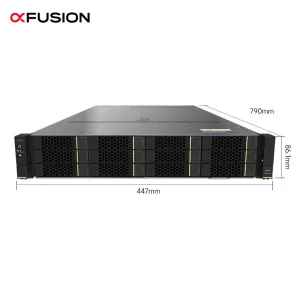
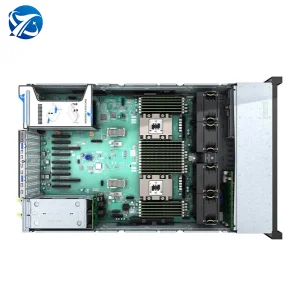
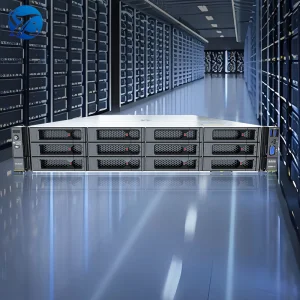
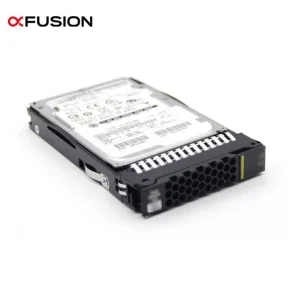
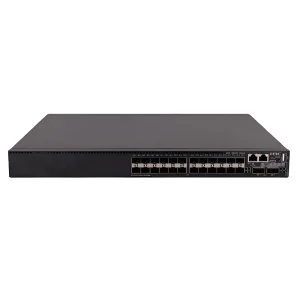
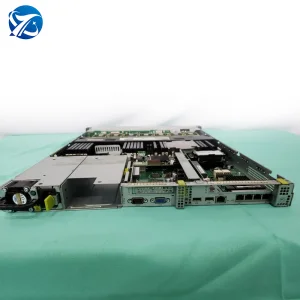
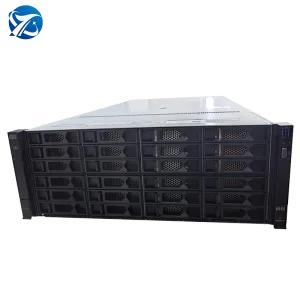
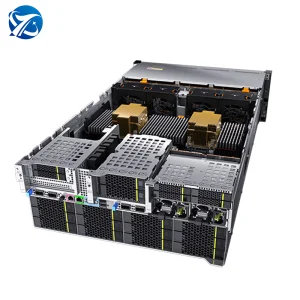
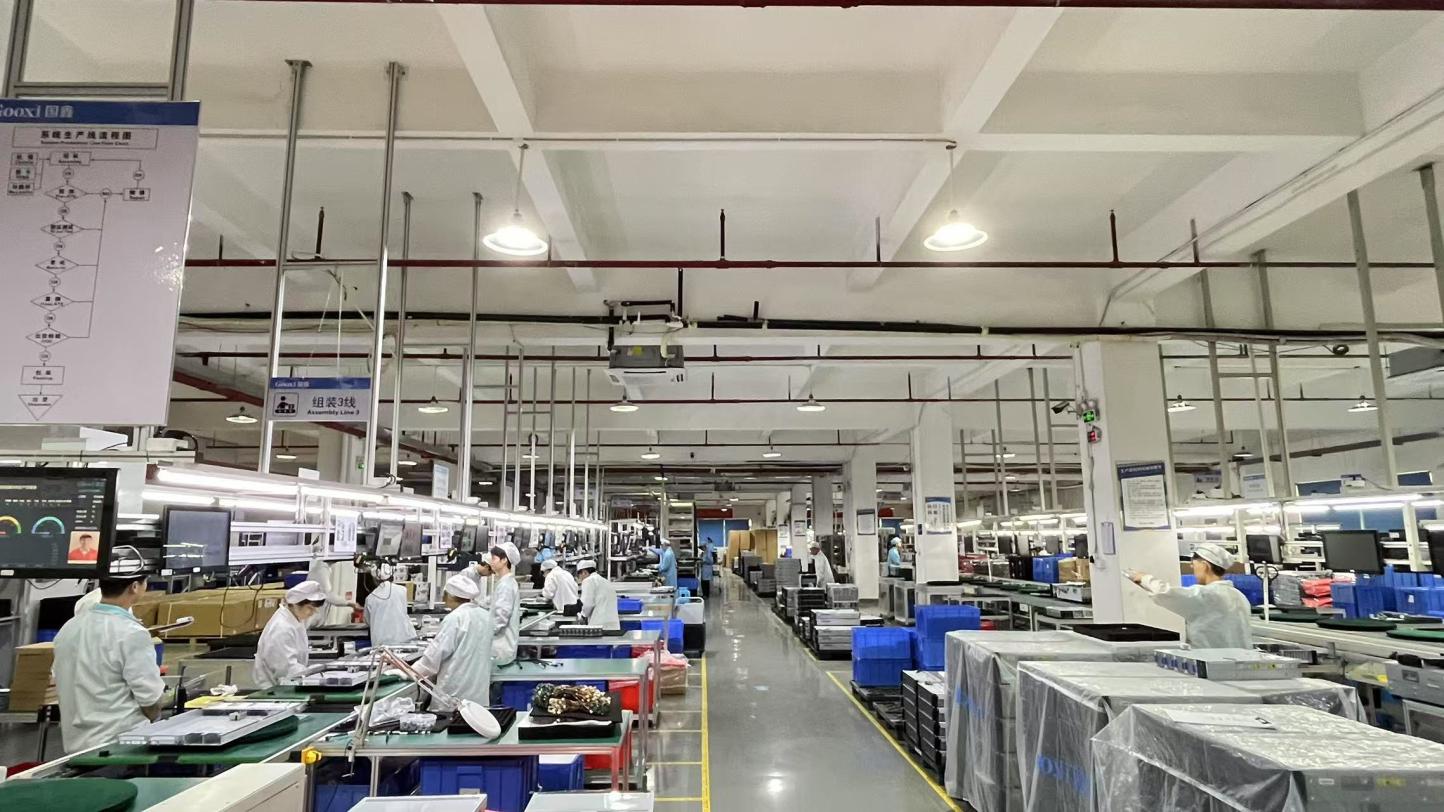
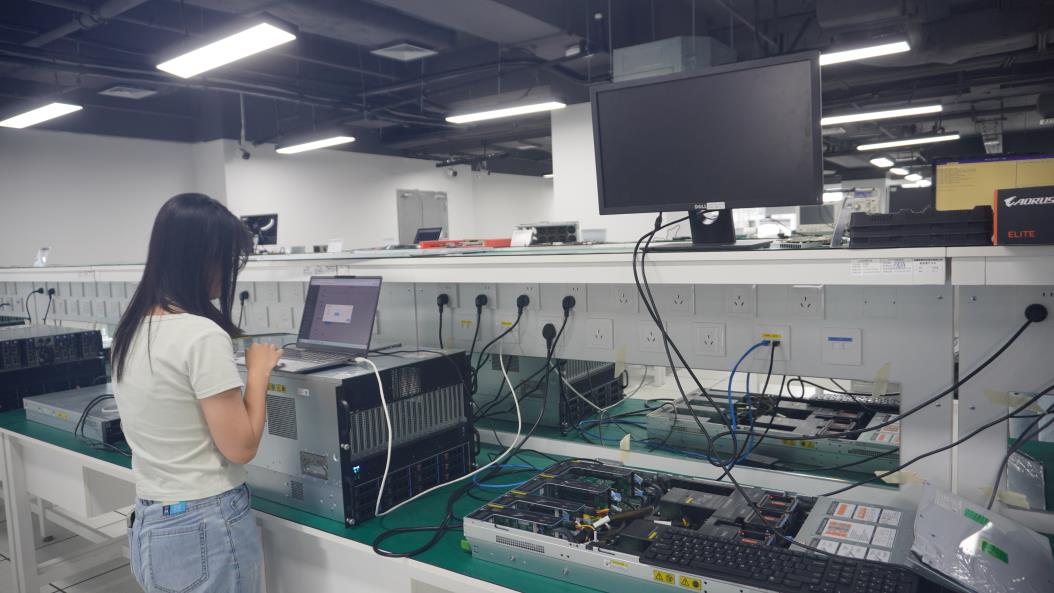
An inside look at our integrated R&D, assembly, and strict multi-phase quality control environments.
Expert technical clarity addressing deep integration, configuration resilience, and remote deployment parameters.
Latency minimization requires eliminating structural data bottlenecks across the memory, network interface, and storage subsystems. Klyvora computing platforms leverage high-bandwidth SAS 12Gb/s data controllers paired with dual-socket enterprise processors to accelerate real-time read/write request cycles. By combining these hardware configurations with 10Gbps high-speed networking fabrics (such as our optimized H3C enterprise core switches), the system ensures that user profiles, persistent remote desktops, and real-time virtualization software run smoothly without the frame drops or audio delays common to legacy storage topologies.
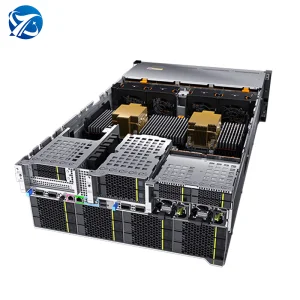
Yes. Klyvora systems, such as our multi-socket 2U and 4U high-density configurations, are engineered specifically to handle high-density GPU scaling and specialized matrix computation loads. Our engineering team, which includes roughly 180 R&D experts, optimizes the physical chassis layout, power distribution units (supporting up to 2000W redundant PSUs), and PCIe configurations to maximize communication efficiency between accelerated cards. This architecture allows companies to run localized open-weights models like DeepSeek completely behind their own private firewall, eliminating data leakage risks to third-party providers while providing remote engineering squads with secure code execution tools.
Every system undergoes a rigorous, multi-stage testing process managed by our 42 dedicated quality assurance professionals. The quality protocol begins with automated pre-assembly component screening, followed by advanced environmental thermal diagnostics to ensure proper heat dissipation. After hardware integration, we conduct extended full-system burn-in stress testing alongside intense input/output data validation. This guarantees that all internal parts—including enterprise RAID cards, multi-channel power systems, and high-capacity SAS storage pools—comply with rigorous global operating metrics before leaving our facility.
Klyvora maintains an active supply network containing more than 860 vetted component suppliers. For large enterprise purchasers, this extensive infrastructure provides significant protection against component shortages and market price spikes. It allows our production center to consistently procure premium server chipsets, high-grade silicon, and reliable storage media. Consequently, we can promise reliable delivery windows, stable pricing structures, and identical system configurations across multi-year deployment plans, simplifying continuous hardware scaling for expanding corporate networks.
Transnational compliance frameworks (including GDPR and HIPAA) mandate precise data location, security boundaries, and absolute protection over personal employee data. By utilizing Klyvora’s dense SAS network repositories (ranging up to 12000GB per node using enterprise-grade 7200RPM mechanical drives), organizations can avoid storing sensitive information on vulnerable edge devices. Instead, all data stays securely centralized within geographical borders on hardware setups that support hardware-level encryption and automated redundancy configurations, ensuring total alignment with strict global compliance standards.