Klyvora
1. The Global Landscape of Enterprise Compute: Why V7 Architecture Rules
As deep learning, massive dataset synchronization, and real-time artificial intelligence inference move to the absolute core of industrial operations, standard compute formats no longer suffice. Global enterprise IT demands are shifting rapidly toward specialized computing platforms capable of high data density, enhanced thermal resilience, and modular memory configurations. At the forefront of this architectural transition is the V7 Server Solution family.
Historically, the transition from V5 and V6 server platforms marked improvements in clock speed and socket density. However, V7 stands out as a paradigm shift. Utilizing fourth and fifth-generation scalable processors, V7 architecture integrates advanced PCIe Gen 5.0 topologies, high-speed DDR5 memory controllers, and built-in hardware acceleration engines such as Intel's Advanced Matrix Extensions (AMX). This yields up to a 3-fold performance improvement for localized artificial intelligence workloads, specifically for inference pipelines like DeepSeek, LLaMA, and other foundational neural networks.
In standard V6 server frameworks, the bus limitation restricts overall storage read-write operations to 16 GT/s per lane. V7 architectures bump this bandwidth to 32 GT/s per lane, double the throughput. When combined with NVMe SSD series like the PM9A3, data centers experience virtually zero bottleneck in high-throughput database synchronization or distributed training clusters.
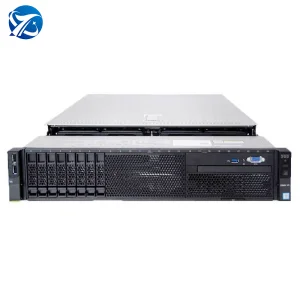
Worldwide, the demand for enterprise compute solutions is driven by two main forces: deep consolidation in traditional cloud environments and rapid growth at the network edge. Industrial organizations are deploying server configurations like the FusionServer Pro 1288H V7 and Dell PowerEdge R760 into highly demanding spaces. From Automated High-Frequency Trading (HFT) platforms in Western financial centers to remote industrial telemetry hubs in the Middle East, the performance-per-watt efficiency of V7 systems has become the baseline metric for infrastructure procurement.
2. Structural Dissection: FusionServer V7 vs. Dell PowerEdge R760
To truly understand how V7 architectures push performance boundaries, a hardware comparison between the top platforms is necessary. Below, we compare the architectural frameworks of FusionServer Pro 1288H V7, FusionServer G8600 V7, and the Dell PowerEdge R760 platform.
| Feature / Metric | FusionServer Pro 1288H V7 | FusionServer G8600 V7 | Dell PowerEdge R760 | |
|---|---|---|---|---|
| Form Factor | 1U Rackmount (Optimized Density) | 4U/8U High-Density GPU Server | 2U Rackmount (General Compute) | |
| Processor Sockets | Dual Intel Xeon Scalable Gen 4/5 | Dual/Quad Scalable Enterprise CPUs | Dual Intel Xeon Scalable Gen 4/5 | |
| Memory Capability | Up to 32x DDR5 DIMMs (Up to 8TB) | Up to 32x DDR5, High-bandwidth Opt. | Up to 32x DDR5 DIMMs, 8TB Capacity | Up to 32x DDR5 DIMMs, 8TB Capacity |
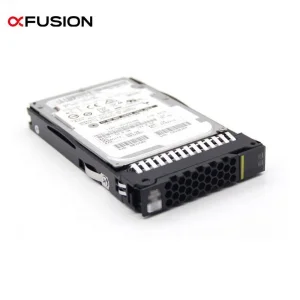
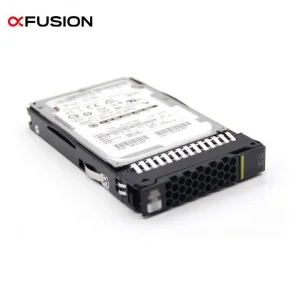
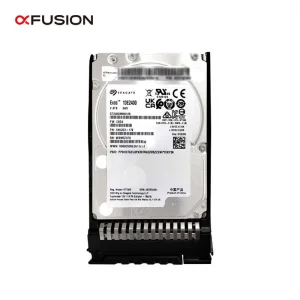
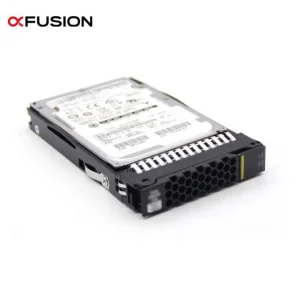
| Storage Support | SAS/SATA/NVMe SSD (U.2/U.3) | High density NVMe Storage arrays | Up to 24x 2.5-inch NVMe/SAS drives | |
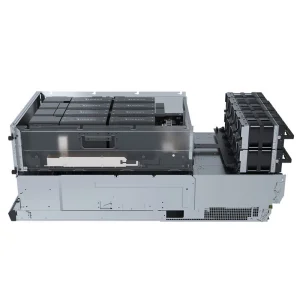
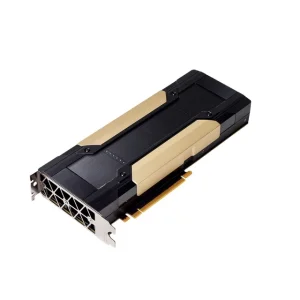
| GPU Accelerator Capacity | Up to 4x Single-Width PCIe GPUs | Up to 8x Dual-Width OAM GPU modules | Up to 2x Double-width / 6x Single-width | |
| Primary Target | Edge NAS / Web Cloud | AI Training / DeepSeek LLM | Enterprise Database / Cloud |
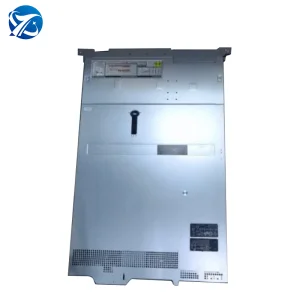
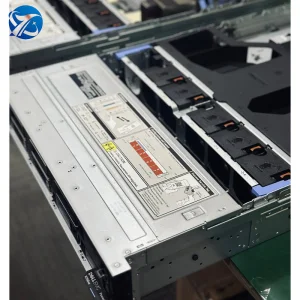
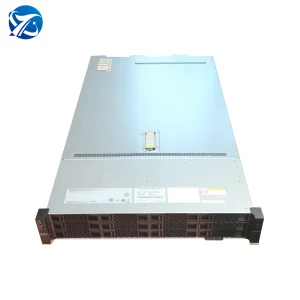
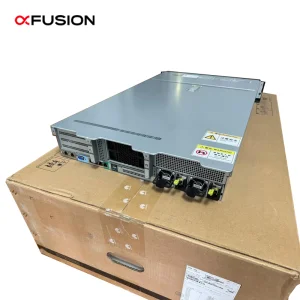
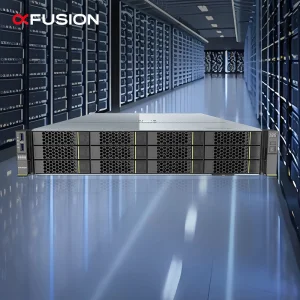
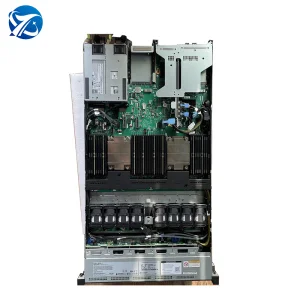
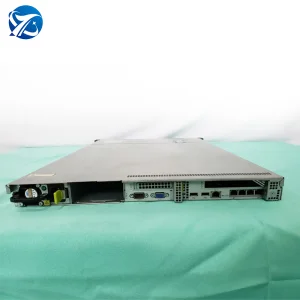
The 1U footprint of the FusionServer Pro 1288H V7 is designed for scale-out data centers where physical space is at a premium. Despite its small profile, its thermal efficiency allows processors to run at high configurations without thermal throttling. In contrast, the FusionServer G8600 V7 is a specialized platform for high-performance computing (HPC) and artificial intelligence. Built for parallel computing tasks, it features high GPU node integration and is suited for intensive jobs like deep learning model tuning, seismic imaging, and complex molecular simulations.
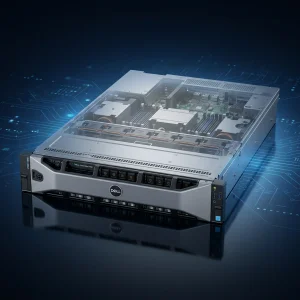
Dell's PowerEdge R760 balance memory density with scalable expansion options. By supporting up to 24 NVMe storage devices, it serves as a highly robust back-end node for enterprise relational databases and virtualization platforms. This architecture minimizes latency and maximizes memory bandwidth to eliminate standard transactional delays.
3. Localized Applications and Real-World Workload Profiles
The real-world value of a V7 solution depends on how well it handles modern, complex workloads. Below are key deployment environments where V7 systems excel:
A. Deep Learning Inference & Localized AI Storage
Running high-parameter AI architectures, like the DeepSeek model series, requires high memory configurations and low disk-to-GPU latencies. Deploying a V7 server configured with 256GB of high-speed DDR5 RAM and PCIe NVMe solid-state storage (such as the PM9A3 series) ensures that model weights can be read and processed with minimal latency. By hosting both model inference pipelines and localized network attached storage (NAS) on the same platform, data centers can run high-throughput API endpoints with low processing latency.
B. Hybrid SSD Arrays for Network File Services
Modern cloud environments rely heavily on hybrid storage arrays. Enterprise servers combine high-capacity, read-intensive SATA SSDs (like the Samsung PM897 and Intel S4520 series) with ultra-fast PCIe Gen 4/5 NVMe drives. In this setup, NVMe drives function as a caching layer for incoming writes and active transactions, while SATA SSDs handle warm data storage. This configuration helps data center operators optimize costs while maintaining high I/O throughput.
C. High-Density virtualization
Managing high VM density on legacy servers often leads to compute bottlenecks. V7 servers address this challenge through processor hardware-assisted virtualization and high memory limits. An IT administrator can host dozens of virtual machines on a single node without encountering memory bottlenecks, lowering hardware acquisition costs and simplifying physical data center management.