Klyvora
Choosing a deep learning server manufacturer is about more than counting GPUs. Teams must match server capacity to real workloads, budgets, and future growth. A model that trains overnight on one system may stall on another because of memory limits, slow networking, or poor cooling. Small details matter. NVIDIA CEO Jensen Huang has described the broader computing shift this way: “The future of computing is accelerated computing.” His observation helps explain why GPU-based systems now shape many deep learning deployments. Still, faster hardware is not automatically the right choice.
This article’s outline compares leading manufacturers through practical criteria: accelerator options, processor and memory configurations, interconnects, storage, and thermal design. It also considers system integration, technical support, upgrade paths, and published performance information. A server’s specification sheet can look impressive, yet installation space, power availability, and software compatibility may change the decision. Those constraints deserve attention before a purchase.
The aim is a useful comparison, not a universal winner. Some organizations need compact systems for development; others require scalable clusters for large training workloads. Manufacturer rankings can also shift as product lines and component availability change. Readers should verify current configurations and service terms directly with vendors. That caveat is important. The strongest shortlist is the one that fits the workload, survives careful testing, and leaves room for honest reassessment.
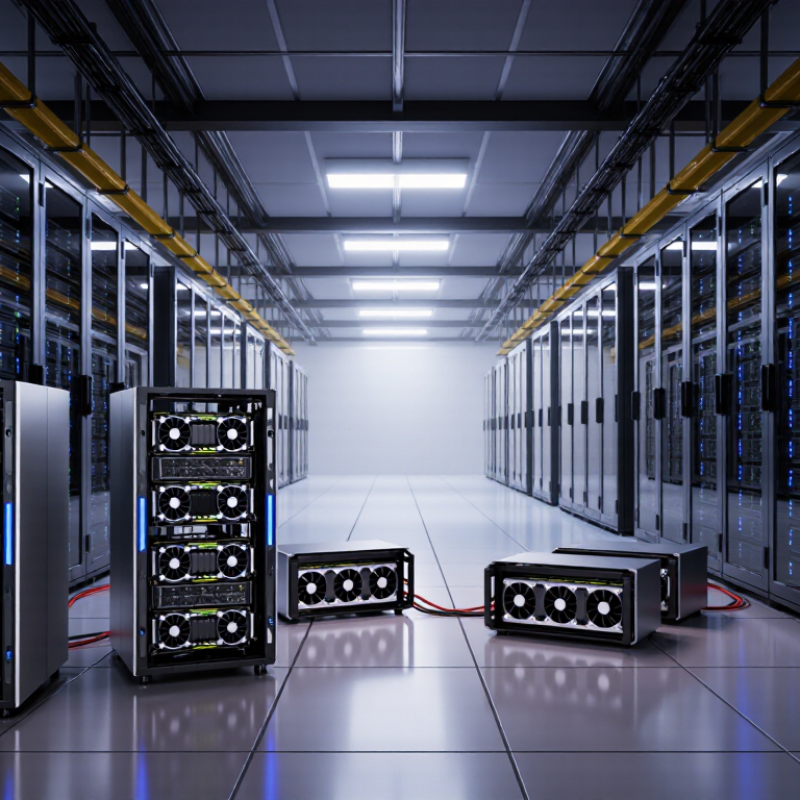
Leadership is not a flashy specification sheet. It is dependable performance under sustained, mixed workloads. Engineers should examine accelerator options, memory bandwidth, and high-speed links as one system, not isolated numbers. A server may run hot for days during model training. Stable power delivery and airflow can matter as much as peak speed. Cooling matters.
Strong manufacturers publish clear thermal limits, validated configurations, and realistic power figures. They explain how components behave at full load, rather than relying on headline throughput alone. Useful evidence includes burn-in testing and documented firmware policies. Ask about spare parts and support response times. Can technicians isolate a failed node quickly?
Deployment experience matters too. A capable supplier helps size racks, plan cooling, and estimate energy use before equipment arrives. It should also provide practical guidance for scaling from a small test cluster to production. Still, no checklist predicts every workload; teams should verify claims with their own models and data. That step is often skipped. Specification comparisons can hide messy details, including cabling, acoustic limits, and access for routine maintenance.
Deep learning servers are distinguished by balanced hardware, not just a high accelerator count. Stanford’s 2024 AI Index reports that training compute for notable AI models has doubled about every five months. That pace makes accelerator memory and bandwidth critical. Large models can stall when parameters and data cannot move quickly enough. High-capacity memory helps keep workloads on-device, while fast links between accelerators reduce communication delays. Check measured performance under your intended workload, not only peak specifications.
The processor, memory, and storage matter too. Multiple accelerators need enough host memory and CPU capacity to feed them. Fast local storage helps when loading large datasets, but it cannot fix a weak network or poor data pipeline. Look for high-speed networking, suitable PCIe lanes, and a layout that avoids bottlenecks between processors and accelerators. Small details count. A server may look powerful on paper and still deliver uneven results.
Power and cooling are practical tests. The International Energy Agency’s Electricity 2024 report estimates that data centers used about 460 terawatt-hours of electricity in 2022, with demand expected to rise substantially. Dense accelerator systems can draw significant power and generate concentrated heat. Review sustained power limits, airflow, and cooling requirements before deployment. I would not treat a larger accelerator count as an automatic win; that assumption is tempting, but incomplete.
Representative peak bandwidths in deep learning servers
Accelerator memory offers the highest bandwidth for feeding large workloads. Host memory, PCIe, and network links serve different roles, so their peak figures are illustrative rather than directly interchangeable. Actual performance depends on the hardware configuration and workload.
Deep learning server manufacturers shape the market through more than raw computing power. Their engineering choices determine how many accelerators fit in a rack, how quickly data moves between them, and how much electricity a system needs. A technician may notice the difference in a well-labeled cable path or a tool-free component tray. Small details affect maintenance time. Cooling matters.
Manufacturers also influence which organizations can adopt large-scale training. Standardized configurations make pricing and deployment easier, while custom systems can match specific models, data pipelines, and facility limits. A research team with limited floor space may value dense servers, but those machines can demand stronger cooling and electrical infrastructure. Flexibility has a cost. Service networks matter, too: delayed replacement parts can interrupt work even when the hardware is powerful.
Competition encourages better performance per watt, clearer system monitoring, and support for changing workloads. Yet product specifications do not tell the whole story. Real results depend on software, network design, and operator experience, so comparing headline speeds alone can mislead buyers. I would not treat any single configuration as universally best. Manufacturers shape the market by balancing speed, reliability, availability, and long-term operating costs—and those priorities do not always align.
Comparing deep learning server manufacturers means looking beyond peak accelerator counts. The Stanford AI Index 2024 reports that training compute for notable AI models has doubled roughly every five months. That pace makes upgrade paths, memory capacity, and interconnect bandwidth practical buying criteria. A server with more accelerators may still train slower if data movement becomes the bottleneck. Check measured workload results, not just advertised theoretical performance. Small differences matter.
Power and cooling expose another gap. Uptime Institute’s 2023 Global Data Center Survey reported a median facility PUE of 1.58, underscoring that server efficiency operates within a larger cooling and power system. Compare power draw under sustained workloads, thermal limits, and service access—not only peak benchmarks. Ask whether systems support standard rack layouts and clear component replacement procedures. These details affect deployment time. Yet comparisons remain imperfect: benchmark results vary with software, model size, and tuning, while real workloads change. A tidy specification sheet rarely captures that mess. Review independent test results, then validate the configuration using representative models and your facility’s power budget.
Choosing a deep learning server manufacturer starts with the workload, not the biggest advertised GPU count. A language model training cluster needs different memory capacity, interconnects, and storage behavior than a vision inference system. Ask for a configuration based on your model size, batch size, and expected growth. The answer should explain trade-offs clearly. A neat spec sheet can still mislead.
Check thermal design and power delivery under sustained load. Request measured results from a workload close to yours, including utilization, error rates, and run duration. Short benchmark bursts are easy to oversell. Also inspect memory bandwidth, accelerator links, PCIe layout, and room for future cards. These details can affect training time more than a headline processor number. Cooling matters. So does noise in a small lab.
Service quality is part of performance. Compare warranty coverage, replacement timelines, firmware updates, remote diagnostics, and access to engineers familiar with distributed workloads. Ask how systems are tested before shipment and whether configuration changes affect support. Clear documentation helps when a run fails at 2 a.m. Include electricity, rack space, and maintenance in the cost estimate. I would still validate claims with a pilot, since vendor results may not match every production setup.
Look for stable performance during long, mixed workloads. Clear thermal limits, realistic power figures, and tested configurations matter. Cooling matters.
Compare accelerator memory, memory bandwidth, high-speed links, and storage behavior together. More accelerators do not guarantee faster training if data movement becomes a bottleneck.
Ask for sustained-load test results, thermal limits, and airflow details. Check whether the system can run for days without overheating. Short bursts tell little.
Sustained power draw affects facility capacity and operating costs. Include cooling, rack space, and maintenance in the estimate. The numbers can surprise you.
Check replacement timelines, warranty coverage, firmware updates, and remote diagnostics. Ask whether technicians can isolate a failed node quickly. That saves time.
Base it on model size, batch size, and expected growth. Training and inference systems may need different memory, interconnects, and storage. One setup rarely fits all.
No. Results vary with software, model size, and tuning. Test a representative workload in your own facility; paper comparisons can look cleaner than reality.
Check rack layouts, cabling, acoustic limits, and access for routine maintenance. Ask about spare parts and shipment testing. Small details matter.
A leading deep learning server manufacturer is defined not simply by the systems it sells, but by its ability to support demanding AI workloads reliably and efficiently. Strong offerings typically combine high-performance processors and accelerators, ample memory, fast storage, and high-bandwidth networking. Cooling, power delivery, system expandability, and compatibility with common software environments also matter, as they influence performance and stability during extended training and inference tasks.
Manufacturers shape the market by balancing computing power, energy use, serviceability, and total cost of ownership. Comparing them involves looking beyond peak specifications to assess system configurations, scalability, reliability, support, and suitability for particular workloads. The right choice depends on an organization’s model sizes, data needs, deployment environment, budget, and plans for future growth. By evaluating these factors together, buyers can select a server platform that meets current requirements while remaining adaptable as AI projects evolve.
