 Klyvora
Klyvora
Klyvora
Choosing among the top ai server manufacturers requires more than comparing processor counts or advertised speeds. A server may look powerful on paper, yet struggle with memory pressure, network congestion, or inadequate cooling. The right choice begins with the workload. Training large language models demands different hardware from inference, computer vision, or scientific simulation.
NVIDIA founder and CEO Jensen Huang has said, “AI is the most profound technology force of our time.” His statement highlights why server selection deserves careful evaluation. Buyers should examine GPU availability, accelerator compatibility, high-speed networking, storage performance, and software support. They should also ask how a manufacturer handles firmware updates, warranty claims, deployment planning, and replacement parts. A reliable supplier explains these details clearly.
Look beyond peak performance. Measure useful performance per dollar, power consumption, rack density, and cooling requirements. A compact data center may not support a server that draws extreme power. Some choices fail. Reference customers, independent benchmarks, and documented service response times can reveal weaknesses that marketing materials hide. Security certifications and supply-chain transparency also matter, especially for organizations managing sensitive workloads.
Experience remains important. Speak with engineers who have deployed similar clusters, not only sales representatives. Ask for a realistic pilot using your data and software stack. The perfect manufacturer does not exist. Even respected vendors may have uneven regional support or long component lead times. This guide examines how to compare the top ai server manufacturers through measurable performance, practical reliability, total cost, and long-term technical fit.
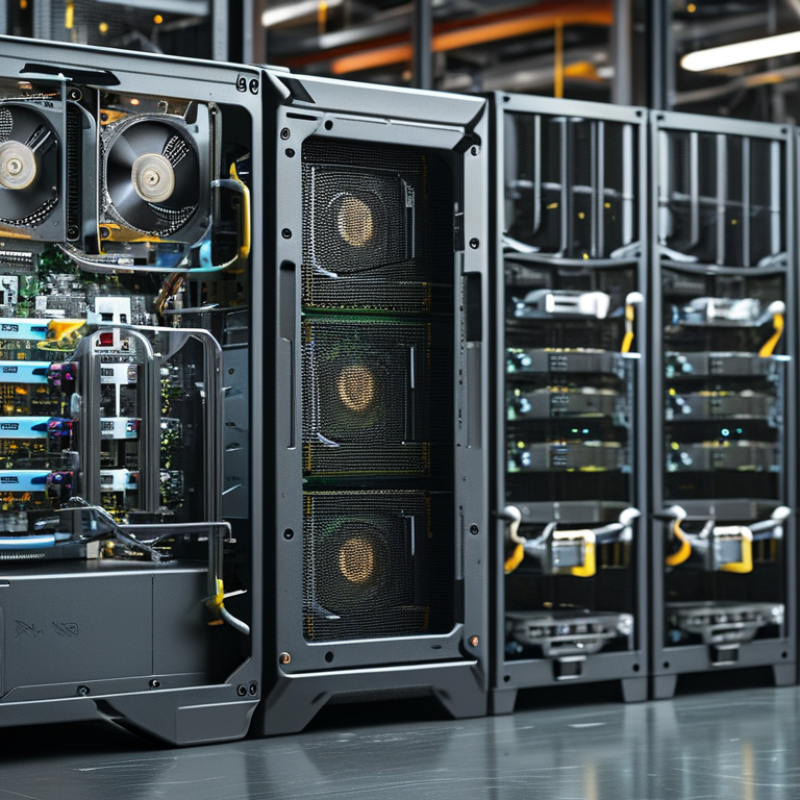
How to Choose the Top AI Server Manufacturers?
Choosing an AI server manufacturer begins with defining the workload, not comparing product names. MLPerf Training measures how quickly a system completes model training. MLPerf Inference measures response performance under specific latency and throughput targets. These results reveal different strengths. A training server may favor high memory bandwidth and fast scaling. An inference server may prioritize predictable latency, compact power use, and efficient scheduling.
Ask manufacturers to provide complete MLPerf disclosures, including hardware configuration, software versions, batch sizes, and power settings. A result without test conditions is difficult to trust. Experienced teams should also inspect cooling design, accelerator communication, storage throughput, and support response times. During evaluation, run a small internal workload beside the published benchmark. A server handling image classification smoothly may struggle with long-context language models. Not everything transfers.
MLPerf is valuable, but it is not the whole answer. Benchmarks use defined datasets and optimized software paths. Real workloads may include irregular data, changing models, or strict privacy controls. That gap deserves attention. Request reproducible test procedures and realistic deployment estimates. Check whether the manufacturer documents firmware updates, spare-part access, and performance degradation under sustained loads. One overlooked detail can alter operating costs. A careful decision combines benchmark evidence with hands-on testing, transparent documentation, and honest discussion of limitations.
| Benchmark Area | Representative Workload | Primary Objective | Official Performance Metric | Typical Precision or Data Format | Main Hardware Characteristics to Evaluate | Best Use in Server Selection |
|---|---|---|---|---|---|---|
| Training | Image classification using ResNet | Reach a predefined target accuracy as quickly as possible | Time to train to the target quality, reported in minutes or hours | Mixed precision, commonly FP16, BF16, or equivalent accelerator-supported formats | Accelerator throughput, high-bandwidth memory, interconnect bandwidth, and distributed scaling efficiency | Compare servers for computer-vision model development and large distributed training clusters |
| Training | Object detection using RetinaNet | Train a detection model to the required accuracy level | Time to reach the reference quality target | Mixed precision with FP32 accumulation where required by the implementation | Tensor acceleration, memory capacity, data-loading performance, and communication overhead | Assess whether a system can maintain throughput when training models with more complex detection pipelines |
| Training | Language understanding using BERT | Pre-train or fine-tune a transformer model efficiently | Time to reach the benchmark’s target quality | BF16, FP16, or FP32 depending on the implementation and numerical requirements | Matrix-multiplication performance, memory bandwidth, accelerator memory, and multi-node networking | Evaluate servers for natural-language processing, search, document analysis, and enterprise language models |
| Training | Recommendation using DLRM-style models | Train a recommendation model containing embedding tables and dense neural-network layers | Time to reach the required quality target | Mixed precision for dense operations; embedding data may require different handling | System memory capacity, memory bandwidth, storage and data-ingestion performance, and network latency | Identify systems suited to advertising, personalization, retail, and other embedding-heavy workloads |
| Training | Speech recognition using RNN-T | Train an automatic speech-recognition model to the prescribed quality level | Time to train to the target quality | Mixed precision with sequence-modeling support | Accelerator compute, memory movement, input-pipeline efficiency, and distributed synchronization | Compare platforms for voice assistants, transcription, call-center analytics, and multilingual speech systems |
| Inference | Image classification using ResNet | Process images after the model has been trained | Offline throughput in samples per second or latency under a defined scenario | INT8, FP16, BF16, or FP32, subject to the benchmark accuracy constraints | Inference accelerator efficiency, batch scaling, memory bandwidth, and software optimization | Select servers for high-volume image analysis and batch-processing services |
| Inference | Object detection using RetinaNet | Detect and localize objects in incoming images | Queries per second, samples per second, or latency depending on the scenario | INT8 or FP16 are commonly considered for optimized deployment; accuracy must remain within the rules | Real-time response capability, accelerator utilization, memory capacity, and host-to-device transfer speed | Choose systems for video analytics, industrial inspection, logistics, and security applications |
| Inference | Language processing using BERT | Serve language-understanding requests at the required response time | Queries per second and latency under Server or Offline scenarios | INT8, FP16, BF16, or FP32 according to the implementation and accuracy requirements | Transformer acceleration, memory bandwidth, batch behavior, tokenizer overhead, and tail latency | Assess platforms for search ranking, classification, question answering, and document-processing APIs |
| Inference | Recommendation using DLRM-style models | Return personalized recommendations for many concurrent requests | Queries per second with a defined latency limit | Mixed precision for dense layers; embedding operations may use separate data formats | Memory capacity, random-access performance, CPU–accelerator balance, network latency, and concurrency | Evaluate servers for online personalization, content delivery, retail, and advertising systems |
| Inference | Large language model generation | Generate responses while meeting interactive service-level objectives | Output tokens per second, time to first token, and request latency where reported | FP16, BF16, INT8, or lower-precision formats when supported without unacceptable quality loss | Accelerator memory capacity, memory bandwidth, interconnect bandwidth, KV-cache efficiency, and power efficiency | Compare servers for chatbots, copilots, retrieval-augmented generation, and text-generation services |
| Scenario | Offline inference | Maximize total work completed when all input data is available in advance | Overall throughput, usually samples per second or queries per second | Precision selected according to the benchmark’s accuracy and compliance rules | Peak accelerator utilization, batch size, data pipeline throughput, and total system balance | Prioritize this scenario for batch scoring, media processing, scientific workloads, and scheduled analytics |
| Scenario | Server inference | Handle independent requests while respecting a latency constraint | Queries per second at or below the required latency limit | Precision must preserve the required model quality while supporting low-latency execution | Tail latency, request scheduling, concurrency, network performance, and power efficiency | Use this scenario for interactive APIs, online search, recommendation, and customer-facing applications |
| System Validation | Power and energy efficiency | Understand the performance delivered within a defined power envelope | Performance per watt or energy used for a completed workload, when power results are available | Same model, accuracy target, and precision configuration as the performance test | Power limits, cooling design, rack density, utilization, and performance consistency | Include this dimension when operating cost, sustainability, or data-center capacity is important |
I server manufacturer?
It measures how quickly a system completes model training. Training often benefits from high memory bandwidth and fast multi-device scaling.
It evaluates response performance under specific latency and throughput targets. Inference systems often need predictable latency and efficient scheduling.
Request hardware details, software versions, batch sizes, power settings, and test procedures. Results without conditions are hard to verify.
No. Benchmarks use defined datasets and optimized software paths. Your workload may behave differently.
Run a small internal workload beside the published benchmark. Image classification may run smoothly, while long-context models struggle.
Fast interconnects help GPUs exchange model parameters with less delay. This matters during large-model training and frequent synchronization.
Not always. Check topology diagrams, measured all-reduce results, sustained bandwidth, routing, and thermal performance.
Test your workload across all accelerators. Record latency, bandwidth stability, and error rates for several hours.
Review cooling, power delivery, storage throughput, firmware updates, spare-part access, and technical response times. Small omissions can increase costs.
Short tests can look impressive. Longer tests reveal thermal limits, unstable bandwidth, and performance degradation.
Trusting impressive specifications without checking deployment behavior. Numbers need context, repetition, and some healthy doubt.
Choosing the top ai server manufacturers starts with matching server capabilities to your specific machine-learning workloads. Use standardized training and inference benchmarks, such as MLPerf results, to evaluate throughput, latency, scalability, and performance consistency. Then compare accelerator memory, since high-capacity configurations with up to 141GB of HBM3e can support larger models and reduce data movement. Interconnect performance is equally important: systems offering around 900GB/s of accelerator-to-accelerator bandwidth can improve communication during distributed training.
Power and operating costs should also guide the decision. High-performance accelerator modules may require up to 700W each, making cooling design, rack density, energy efficiency, and facility capacity essential considerations. Finally, rank manufacturers by verified performance, technical support, warranty coverage, deployment expertise, upgrade options, and total cost of ownership. The best choice is not always the fastest system; it is the solution that delivers dependable results, manageable operating expenses, and long-term value for your organization’s AI goals.
