Klyvora
Choosing the best machine learning server manufacturer in 2026 requires more than comparing processor counts. A rack may look impressive on paper, yet struggle with heat, power limits, or slow support. Buyers should assess the complete system: accelerators, memory, networking, cooling, software compatibility, and service coverage. There is no universal winner.
The investment behind these choices is substantial. IDC’s Worldwide AI and Generative AI Spending Guide projected global AI spending would reach $632 billion by 2028, with a 29% compound annual growth rate from 2023. That figure includes more than servers, so it should not be mistaken for a server-market forecast. Still, it signals why manufacturers are racing to deliver reliable infrastructure. At NVIDIA’s March 2024 GTC keynote, founder and CEO Jensen Huang said, “The next industrial revolution has begun.” The claim is bold. The practical test is whether a system can sustain demanding workloads without costly downtime.
This guide compares manufacturers against criteria that matter in real deployments: performance per watt, accelerator availability, validated configurations, expansion options, and support responsiveness. We also consider whether published benchmarks match the workloads buyers actually run. A glossy specification sheet cannot answer every question. Nor can one review capture regional supply constraints or changing prices. Use the comparisons as a starting point, then verify configurations and service terms directly with each vendor.
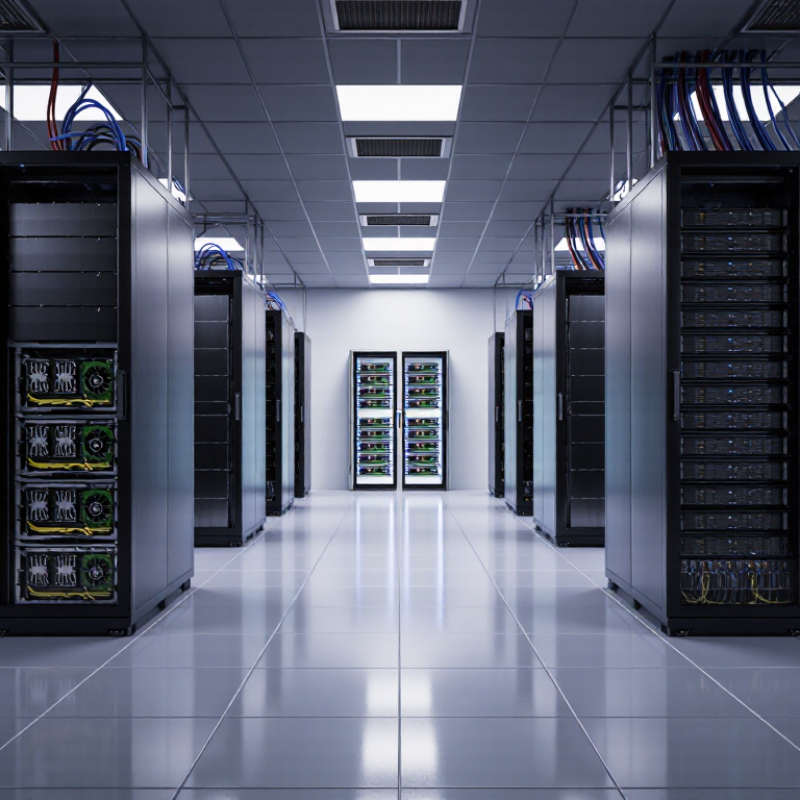
A strong machine learning server manufacturer starts by asking what the system must actually run. Training large models, fine-tuning, and serving predictions place different demands on hardware. One configuration rarely suits every workload. That matters.
Look for clear engineering choices, not just impressive component lists. GPU memory, memory bandwidth, CPU-to-accelerator links, and network speed can all limit performance. A useful manufacturer can explain how these parts work together and provide test results for relevant workloads. Ask about sustained performance, too. A server that runs well for ten minutes may behave differently during a long training job.
Thermal design deserves close attention. Dense systems need carefully placed fans, unobstructed airflow, and cooling plans matched to the data center. Reliability also depends on practical details: accessible drive bays, replaceable power supplies, firmware updates, and support staff who understand accelerator hardware. Small details count.
Claims should be specific and verifiable. Request power measurements, configuration notes, and details about software compatibility before comparing quotes. A low purchase price may hide extra costs for integration, support, or facility upgrades. I would not treat a benchmark as a promise; results can shift with data, software versions, and tuning. That uncertainty is worth discussing openly. A manufacturer’s answers to these questions often reveal more than a polished specification sheet.
Machine-learning servers are shaped by the workload, not by a specification sheet alone. Training large models favors accelerators, fast connections, and enough memory to keep data moving. Smaller, latency-sensitive inference jobs may need fewer accelerators but steadier response times. Memory bandwidth matters. Stanford’s AI Index 2025 reports that training compute for notable AI models has doubled about every five months since 2010. That trend makes upgrade paths and power budgets practical design questions.
The Lawrence Berkeley National Laboratory’s 2024 U.S. Data Center Energy Usage Report estimates that U.S. data centers used 176 terawatt-hours in 2023, about 4.4% of national electricity use. It projects 325 to 580 terawatt-hours by 2028. Cooling and power delivery are therefore part of server performance, not afterthoughts. A fast accelerator throttled by heat is expensive theater. Test the actual mix: training, retrieval, batch jobs, and peak inference. Measure energy use, memory utilization, network traffic, and latency together. Benchmarks help, but rarely reproduce a messy production queue. Utilization may also shift after deployment, so leave room for imperfect assumptions. A practical design should support growth without replacing the whole rack.
In 2026, machine-learning server leaders are manufacturers that can deliver more than powerful processors. Buyers need dense accelerator systems, fast networking, dependable memory, and cooling that works in real data-center conditions. IDC’s Worldwide Quarterly Server Tracker reported $77.3 billion in global server revenue in Q4 2024, up 91.9% year over year. That record reflects surging demand for accelerated servers, though it does not identify a single future winner. Performance claims still need workload-specific testing.
The strongest contenders combine custom system design with reliable supply, validated software, and service teams able to resolve failures quickly. Look for evidence from independent benchmarks, published thermal limits, and deployment references—not just peak performance figures. A server that runs hot in a crowded rack can lose its advantage. That detail matters. Market leadership can also shift as accelerator availability and power constraints change; even a well-designed platform may not suit every model or budget.
Tips: Ask manufacturers to demonstrate your own workload, including data loading and sustained operation. Compare usable throughput per watt, rack density, support response times, and upgrade options. Keep one caveat in view: impressive benchmark results may not predict production performance.
There is no single best manufacturer for every workload. This comparison describes manufacturer categories rather than naming or ranking companies; actual server specifications vary by model and configuration.
| Manufacturer category | Typical strengths | Key considerations | Best fit | What to verify before buying |
|---|---|---|---|---|
| GPU-platform specialists | Often offer systems designed around accelerator-heavy training, with attention to power delivery, cooling, and high-speed interconnects. | High-density configurations can require substantial power, specialized cooling, and compatible data-center infrastructure. | Large-scale model training and other workloads that benefit from multiple accelerators working together. | Supported accelerator configurations, measured thermal limits, power requirements, network options, and validated software stack. |
| Diversified server manufacturers | Typically provide a broad server portfolio, established enterprise support processes, and options for combining CPU, memory, storage, and accelerators. | Available configurations and delivery times can differ by region, product generation, and component supply. | Organizations seeking machine-learning systems alongside general-purpose enterprise infrastructure. | Service coverage, warranty terms, validated configurations, spare-parts availability, and the exact bill of materials. |
| ODM and direct manufacturers | Can offer configurable hardware and direct engagement on system design, especially for larger or specialized deployments. | Support arrangements, integration responsibilities, and availability of local service can vary substantially. | Experienced teams with clear hardware requirements and the capacity to manage integration and lifecycle support. | Who provides on-site service, firmware updates, system validation, replacement parts, and escalation support. |
| HPC-focused manufacturers | Often emphasize cluster design, high-speed fabric options, workload scheduling, and integration across compute nodes. | A cluster-level solution may require more planning than a single-server purchase, including networking, storage, and facility capacity. | Distributed training, research computing, and organizations deploying multiple coordinated servers. | End-to-end cluster benchmarks, fabric compatibility, storage throughput, scheduler integration, and deployment services. |
A reliable 2026 selection should be based on the exact system configuration and workload tests, not manufacturer category alone. Compare total cost of ownership, performance per watt, support coverage, and delivery commitments using current written quotations.
How to Compare Performance, Scalability, Support, and Cost
The best choice depends on your actual workload, not a headline specification. Compare measured throughput and p95 latency using your models, batch sizes, and data pipeline. MLCommons’ MLPerf benchmarks provide useful standardized comparisons, but results can change with software versions and system configuration. Ask vendors for test settings, not just peak scores. Details matter.
Scalability means more than adding accelerators. Check network bandwidth, memory capacity, rack power, cooling, and how performance changes as you add nodes. Stanford HAI’s 2025 AI Index reported that the inference cost for GPT-3.5-level performance fell more than 280-fold between November 2022 and October 2024. That is not a server-price comparison, but it shows why yesterday’s cost assumptions can mislead. Recalculate expected usage regularly.
Support and operating costs deserve equal scrutiny. Uptime Institute’s 2024 Global Data Center Survey reported an average PUE of 1.58 for 2023, a reminder that cooling and facility overhead affect total cost. Request a three-year quote covering power, networking, spares, and support response times. Then run a sustained workload test and record thermal throttling, errors, and latency. I would still treat any short benchmark cautiously; real deployments are messier.
The best manufacturer depends on the work your team actually runs. Training large models needs different hardware from serving predictions or tuning smaller models. Start with a representative workload, not a flashy specification sheet. Measure model size, batch size, memory use, and expected growth. Small details count.
Ask manufacturers to demonstrate your workload on the proposed configuration. Watch GPU memory during training, check how quickly data reaches the processors, and note whether performance stays steady under sustained heat. A server with many accelerators can still disappoint if memory, storage, or networking becomes a bottleneck. Request configuration details in writing. Then compare results, not just peak performance claims.
Support matters after installation. Check response times, replacement-part availability, firmware updates, and how long the configuration will remain supported. Ask who handles troubleshooting when hardware and software interact; vague answers deserve a follow-up. I would not assume the lowest purchase price means the lowest cost over time. Still, estimating future needs is imperfect. Leave room for growth, but avoid paying for capacity your team cannot use. A practical choice fits your workload, operating skills, budget, and support expectations—not an imagined benchmark.
Match the system to your workload. Measure throughput, latency, memory use, and sustained performance with your own models.
No. Ask for test settings and software versions. Standardized benchmarks help, but production results can differ.
Review network bandwidth, memory capacity, rack power, and cooling. Test performance as you add nodes.
Use your models, batch sizes, and data pipeline. Watch accelerator memory, data delivery, heat, errors, and latency.
Request a three-year estimate covering power, networking, support, and spare parts. Cooling costs matter too.
Check response times, replacement-part availability, firmware updates, and support duration. Ask who handles hardware and software issues.
Not necessarily. Memory, storage, or networking can become bottlenecks. More hardware may add cost without useful gains.
Plan for realistic demand and possible expansion. Forecasts are imperfect; avoid buying capacity your team may never use.
Choosing the best machine learning server manufacturer in 2026 depends on how well its systems match your workloads, growth plans, and budget. Machine learning tasks can demand substantial computing power, fast data access, efficient cooling, and support for specialized accelerators. A strong manufacturer stands out through reliable hardware, flexible configurations, clear product documentation, and responsive technical support—not performance claims alone.
Compare options using practical criteria such as training and inference performance, scalability, compatibility with your software, service coverage, and total cost of ownership. Consider how easily a system can expand as datasets and models grow, as well as its power and maintenance requirements. The right choice varies by organization: a small team may prioritize affordability and simplicity, while a larger operation may need high-density compute and room to scale. Evaluating these needs together can help you select a manufacturer that supports both current projects and future machine learning demands.