 Klyvora
Global buyers evaluating an ai training server manufacturer face a practical question: which supplier can deliver dependable computing, cooling, and support? Training workloads place sustained pressure on accelerators, memory, networking, and facility power. A server that looks impressive in a specification sheet may still disappoint when racks run hot or deployments stall. Details matter.
Industry forecasts show why this choice is receiving attention. IDC’s Worldwide AI and Generative AI Spending Guide, published in 2024, projected global AI spending would reach $632 billion by 2028, representing a 29% compound annual growth rate from 2024. Stanford University’s 2025 AI Index reported that global corporate investment in AI reached $252.3 billion in 2024. These figures describe broader AI investment, not server orders alone. That distinction matters. NVIDIA CEO Jensen Huang, an influential figure in AI computing, has described AI as “the most powerful technology force of our time.” His words capture momentum, but buyers still need evidence beyond a compelling forecast. Compare validated performance, workload-specific configurations, power requirements, service coverage, and delivery timelines. Ask how a manufacturer handles firmware updates and component changes across large deployments. Check references from organizations running similar training workloads. No single ranking fits every buyer. Budget, local support, data-center limits, and project scale can change the best choice. This guide compares leading manufacturers through those practical criteria, while recognizing that specifications do not tell the whole story. Some trade-offs remain hard to judge until systems are installed and running.
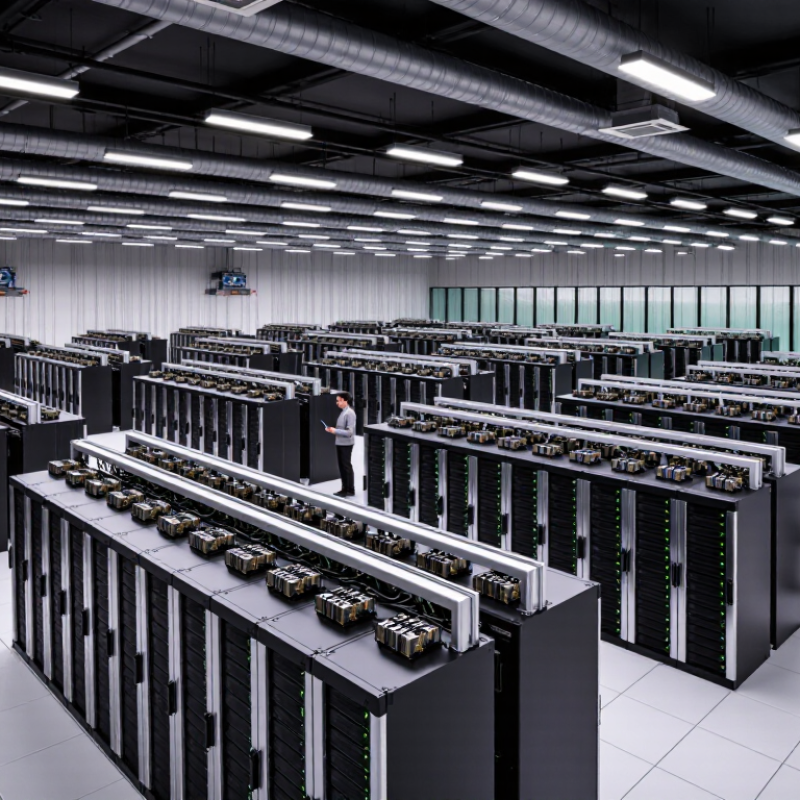
An AI training server manufacturer is more than a seller of powerful hardware. It should understand how GPUs, CPUs, memory, storage, and network fabrics work together under sustained workloads. Buyers can ask for thermal and power data from representative training runs, not just peak specifications. A credible manufacturer explains configuration limits, service coverage, firmware maintenance, and component sourcing clearly. The details matter: a server that overheats in a crowded rack may deliver less useful throughput than its datasheet suggests.
Tips: Request an architecture diagram, validated workload results, and expected power draw per rack. Check whether the supplier supports burn-in testing, spare parts, and remote diagnostics. Ask what happens when a GPU, fan, or power supply fails. Small omissions can cause expensive delays.
Experience also shows in how a manufacturer handles uncertainty. Training jobs vary, and no single benchmark represents every model or data pipeline. Reliable teams discuss trade-offs, such as memory capacity versus accelerator count, and provide testable acceptance criteria. They should document cooling assumptions, network topology, and upgrade paths. Still, buyers should verify claims independently; polished answers are not proof. Some specifications remain hard to compare. That is worth admitting.
Use these criteria to evaluate manufacturers without relying on brand claims. Technical configurations vary by workload; confirm all specifications and performance figures for the exact system offered.
| Evaluation Dimension | What a Capable Manufacturer Provides | Useful Data or Specification to Compare | Buyer Verification |
|---|---|---|---|
| Accelerator configuration | A validated server design that specifies accelerator count, supported power envelope, memory, and compatible software. | Accelerator model and quantity; memory capacity per accelerator; total system power; supported framework and driver versions. There is no single accelerator count or memory size suitable for every training workload. | Request the exact bill of materials, thermal limits, and a workload-relevant benchmark with its software and test configuration. |
| Accelerator interconnect | A documented topology that explains how accelerators communicate within a server and what links connect multiple servers. | Interconnect type, link count, bandwidth, topology, and any oversubscription. PCI Express 5.0 x16 has a theoretical bandwidth of 64 GB/s in each direction before protocol overhead. | Check the system diagram and validate multi-accelerator communication using an appropriate collective-communication test. |
| Scale-out networking | Network options and tested configurations for distributed training, including supported adapters, port speeds, and RDMA options where required. | Adapter count and speed, port layout, RDMA support, and fabric requirements. A 400 Gb/s Ethernet link has a nominal line rate of 50 GB/s before encoding and protocol overhead. | Confirm end-to-end compatibility with the intended switches, cabling, network software, and training framework; request measured throughput and latency results. |
| Power and cooling | Power and thermal specifications for the complete configured system, plus guidance for the facility conditions it requires. | Maximum and typical input power, supported voltage, airflow direction, operating temperature limits, and air- or liquid-cooling requirements. Heat output can be estimated from electrical power: 1 kW is approximately 3,412 BTU/h. | Match the system’s documented requirements to rack power, cooling capacity, power distribution, and site operating conditions. |
| Memory and storage | A balanced configuration that supports model loading, training data pipelines, local scratch needs, and the intended storage network. | System memory capacity and bandwidth; drive type, capacity, and interface; boot and scratch-drive layout; supported external storage connections. | Ask for the populated drive layout and a data-loading test using a representative dataset and the planned storage path. |
| Management and serviceability | Remote monitoring, firmware and inventory controls, diagnostics, and documented procedures for replacing serviceable components. | Out-of-band management features, alert and log access, firmware update process, supported management interfaces, and field-replaceable components. | Request a management demonstration, sample diagnostic logs, firmware lifecycle policy, and component replacement instructions. |
| Reliability and validation | Documented system-level testing, configuration control, and a process for handling failures and corrective actions. | Burn-in or acceptance-test coverage, error reporting, thermal and power validation, and the conditions used for published performance results. | Define acceptance tests and pass criteria in the purchase agreement; distinguish measured results from theoretical peak figures. |
| Global delivery and support | Clear regional delivery, warranty, repair, spare-parts, and escalation arrangements for the destination country. | Warranty term and coverage, service response targets, local repair options, spare-parts availability, shipping terms, and applicable export or import documentation. | Confirm service coverage and response commitments in writing for the installation location, not only the manufacturer’s headquarters region. |
Comparison note: treat performance, availability, power draw, and service commitments as configuration- and region-specific. Ask every supplier to quote the same workload, system configuration, and acceptance-test conditions.
It explains how accelerators, memory, storage, and networking work together under sustained workloads. Ask for an architecture diagram and rack-level power estimates. Peak figures can mislead.
Ask suppliers to test the same model, dataset, and software stack. Compare time-to-train, power draw, and scaling efficiency. One benchmark is not enough.
Heat can cause a server to slow down inside a crowded rack. Request logs from sustained tests and confirm the cooling assumptions. Small details matter.
Request written response targets, escalation steps, remote diagnostics, and onsite repair coverage. Ask whether replacement fans, power supplies, and other parts are available nearby. Test support with a technical question.
Request a documented bill of materials, realistic delivery timelines, and validated workload results. Check that the proposed configuration fits the intended model and training method. Estimates can change.
Compare memory capacity, accelerator count, network bandwidth, and storage throughput. More accelerators are not always better if memory or data movement becomes a bottleneck.
Not exactly. Results may differ with local power limits, cooling, software, and data pipelines. Treat test results as evidence, not a guarantee.
Agree on testable acceptance criteria, firmware maintenance, and failure procedures. Check what happens if a GPU, fan, or power supply fails. I would still verify claims independently.
Choosing an AI training server manufacturer requires more than comparing hardware specifications. Buyers should assess the manufacturer’s experience designing systems for demanding AI workloads, along with its ability to provide dependable engineering guidance and ongoing support. Key technologies include accelerators, high-speed interconnects, scalable memory, efficient cooling, and software compatibility, all of which affect training speed, reliability, and operating costs.
When evaluating manufacturers, compare real-world performance, configuration options, service response, warranty coverage, and capacity to support future expansion. Global buyers should also consider delivery timelines, regional technical assistance, infrastructure requirements, and deployment planning. A careful assessment of these factors can help organizations select a suitable partner and build an AI training environment that meets current needs while remaining adaptable as workloads grow.
